Colonisation
Planting a charter on an empty shore demands preparation, the right vessel, and no small measure of fortune. Against an occupied island, that same charter no longer seizes the land — it can only complete the island's ruin.
 Combat
 Espionage
 Fleet
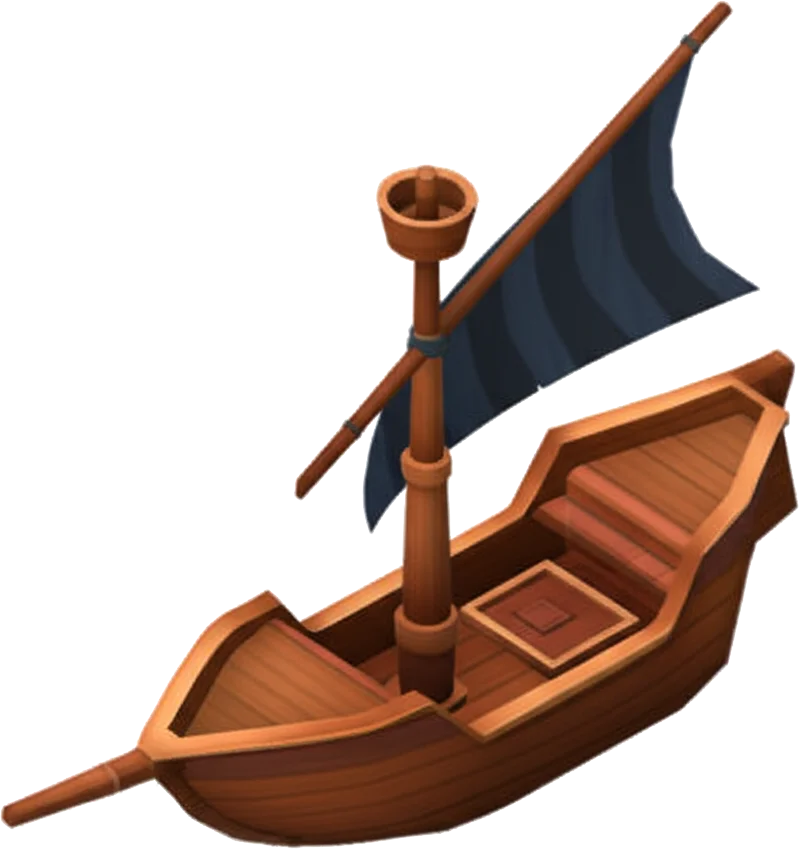
FleetThe Colonisation Ship
At the heart of every colonial expedition is the  Colonisation Ship — a heavy, slow-moving vessel fitted not for war but for settlement. She carries the surveyors, carpenters, clerks, and founding charter needed to establish governance over new territory. Without her in the fleet, no claim can be made, no matter how decisive the victory.
The Colonisation Ship carries no armament to speak of and crawls across open water. She must be escorted by warships, for even a modest patrol could sink her. Governors who send her unprotected into contested waters rarely see her again.
| Cost | Speed | Attack / Defense | Prerequisites |
|---|---|---|---|
| 8000 gold, 7000 lumber | 0.5 | 0 / 5 | Harbour 10, Sail 5 |

Claiming Uninhabited Islands
Scattered across the archipelago are islands with no Governor — wild shores where no flag has been planted. Claiming one is the simplest form of expansion. A fleet carrying a Colonisation Ship sails to the unoccupied island and, if the shore is subdued and the founding charter is approved, the territory passes under the Governor's authority.
Upon a successful claim, the settlement is established with a Main House at its first level and a modest provision of starting resources — enough to begin construction, but far from self-sufficient. Governors should plan a supply convoy shortly after the founding.
Not every uninhabited island is eligible for colonisation. Some are barren rocks, reef-bound atolls, or otherwise unsuitable for settlement. The harbour master will note which islands accept a colonial charter.
An empty shore is not always a harmless one. Wild defenders still guard many such islands, and a failed charter does not guarantee the Colonisation Ship's return. If the expedition is badly mauled, the vessel may be lost with it.
Razing Occupied Settlements
An occupied settlement cannot be claimed by force. Military victory breaks walls and batters stores, but the island remains under its current Governor unless later emptied by other means. A colonisation charter sent against an occupied shore can only turn victory into devastation.
The assault fleet must include Catapults capable of inflicting structural damage. Without siege weaponry, even a victorious army cannot dismantle the fortifications that anchor a rival's authority. The target's 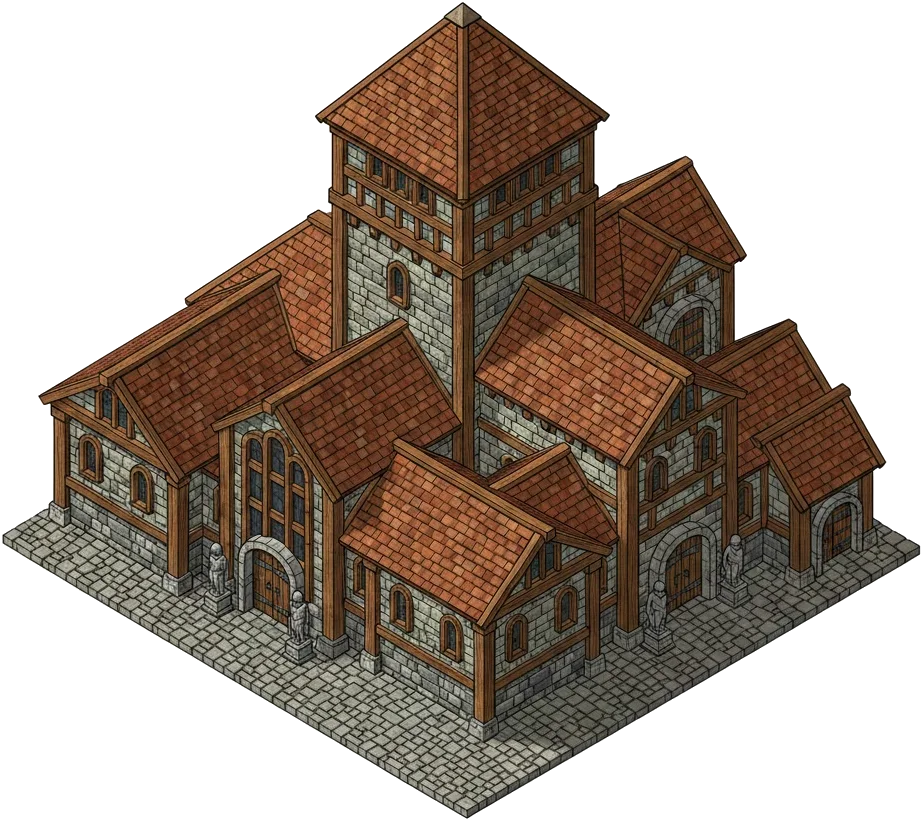 Main House must stand at its first level, and the catapults in that same victorious assault must still deal damage — only then is the seat of governance considered broken enough for razing.
Beyond siege damage, every defending soldier must be routed or eliminated. A single garrison holdout prevents the charter party from landing. If even one defender survives the engagement, the razing fails.
If the charter holds, the island is devastated in place. Ownership and the island's name do not change, but every building collapses except the Main House, which remains at level 1. Resources, research, and whatever plunder the battle already decided are left as they lie.

Fortune and the Founding Charter
Even when every condition is met — the ship present, the battle won, the Main House broken — colonisation is not guaranteed. The founding charter must be ratified, and the seas are capricious. A fresh governor begins near 65%, but charter odds decline as your realm grows (around 33% by five islands in the current world).
Settlement morale also matters. If happiness falls below 40, charter odds are reduced by about10%. In severe unrest, the penalty can reach 45%. Keep the homeland stable before committing a founding vessel.
When fortune denies an uninhabited claim, the Colonisation Ship often returns to her home port for another expedition. Yet the council should not mistake this for certainty: a bloodied landing may still cost the vessel.
The Fate of the Colony Ship
The Colonisation Ship is not spent the same way in every campaign. Her fate depends on whether she sails toward an empty shore or an already-settled one.
On an uninhabited island, a successful colonisation consumes the ship. Her timbers are broken down for the new settlement, her crew absorbed into the founding population, and her charter sealed in the new Main House. If the founding charter fails on an empty island, she normally returns to port.
Against an occupied island, the Colonisation Ship is always lost once committed. If the raze succeeds, she is spent in the ruin. If it fails, she is still gone — swallowed by the assault, the shoals, or the fires onshore.
Protections and Restrictions
The Governor's Council enforces several protections to prevent the complete ruin of any domain:
Last-island protection. A Governor's final settlement cannot be seized. The Council will not ratify a charter that would leave a ruler without any territory. If the defending Governor holds only one island, the razing attempt is refused regardless of military outcome.
Starter settlement immunity. The island granted to each Governor upon their appointment to the archipelago carries a permanent charter of protection. Starter settlements cannot be colonised or razed — not by force, not by any means. This holds true even if the original Governor abandons the island.
Self-colonisation. A Governor cannot colonise a settlement already under their own authority. Fleets dispatched to friendly territory arrive as reinforcements, not as conquest expeditions.
Planning a Colonial Campaign
Expansion through colonisation requires patience and methodical preparation. The Council recommends the following order of operations for any Governor seeking either a new colony or the ruin of an enemy harbour:
- Reconnaissance. Dispatch spy ships to assess the target's garrison strength, fortifications, and stockpiles. A blind invasion wastes ships and lives.
- Siege preparation. Train sufficient catapults to reduce the Main House to its first level. Against a heavily fortified settlement, multiple bombardment waves may be necessary.
- Assault. Launch the war fleet with overwhelming force. Every defender must be eliminated and the Main House broken if the target is occupied. On unclaimed shores, wild guardians must still be beaten back before a charter can hold.
- The charter. Ensure a Colonisation Ship sails with the resolving fleet. On empty land she may found a new settlement. On an occupied island she may instead complete a raze in place if every siege condition is met.
- Supply. When a new colony is founded, dispatch supply convoys with resources and additional troops. A new colony without resupply is a colony that will not survive the season.